Workplace Woes
More of the same bad situation:
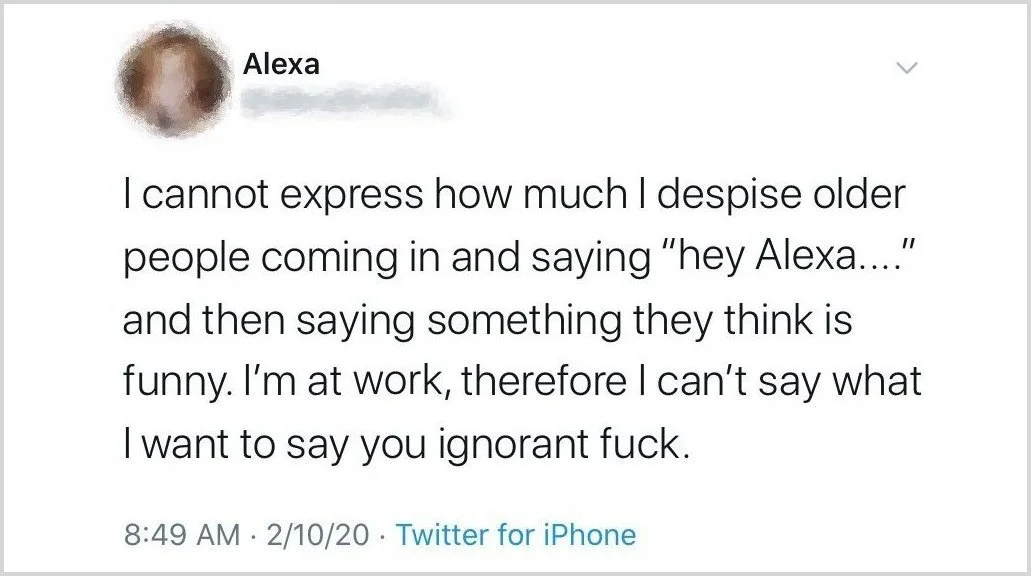
All the problems that people named Alexa (and similar) are experiencing because of Amazon’s use of their name also happen to them when they’re at work. The fact that many jobs require workers to wear name tags, display their name on their desk, or give it to callers over the phone makes them easy targets for customers who just can’t resist demonstrating how well Amazon has taught them what “Alexa” now means. Unfortunately, because they’re at their jobs and representing a company or business, they’re not free to react to these “jokes” in the way they might if they were on their own time, because doing so could go against company policy and cost them their job. Plus, for those whose work involves commissions or tips, reacting negatively to customers who are talking to them like they’re a machine could result in the loss of earnings.
“Bartender should have never told me her name is Alexa.”
The people who are working service industry jobs get it the worst, but anyone named Alexa (or similar) can be subjected to this form of harassment no matter their occupation. The fact that these customers are simply repeating what Amazon has trained them to say to “Alexa” gives them the false impression that what they’re doing isn’t really wrong; that people with this name are fair game. In fact, customers frequently go on social media to brag about harassing workers at their job in this way, getting likes and kudos from their followers.




When the harassment is coming from inside the house:
Unfortunately, the demeaning “jokes” directed at people named Alexa (and similar) while they’re at work sometimes come from their own coworkers, managers, and bosses. There’s little recourse for them to do anything about it, however, because (as degrading and dehumanizing as it is), it’s not commonly recognized as a problem, the way that sexual harassment, or racial and gender discrimination are.
“Had to email the search committee to remind them to unplug their devices. They still forgot.”
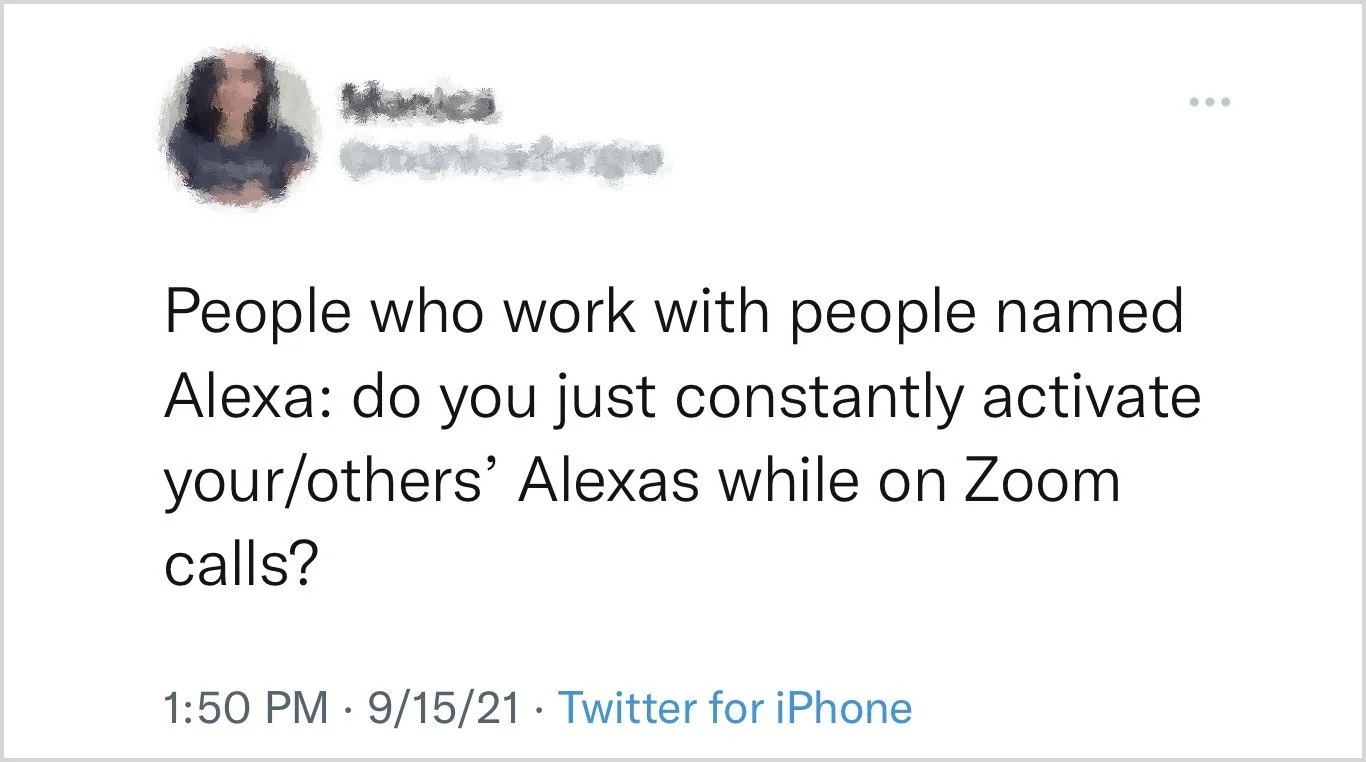
Beyond the name-related harassment, people named Alexa (and similar) bear the burden of having a name that’s the wake word of their colleagues’ AI devices during videoconferencing while working from home. Any time they are addressed or mentioned, devices go off, often times interrupting them when they’re asked for input. As is the case with virtual learning, device users rarely take necessary measures (such as changing wake words, or unplugging devices) to allow their coworkers to be included in the meeting without causing interruptions and chaos. One can only guess how much the desire to avoid disruptions during meetings is motivating the colleagues of people named Alexa (and similar) to avoid speaking to or about them during these work discussions.




Workplace wake word woes:
In addition to getting “joke” commands from customers and coworkers, and triggering coworkers’ devices during WFH meetings, people named Alexa (and similar) also have to deal with having Amazon’s virtual assistant in their workplace, now that so many businesses have installed devices. That means they have the same problems in their workplace that they have in all the other places where they encounter them: devices going off when their name is said, as well as hearing users barking commands at their name. And same as with those other situations, it’s up to the people named Alexa (and similar) to try and negotiate with whoever controls the devices to change the wake word (provided the devices are not the type on which Amazon restricts this option).
“I wish Alexa Chung had a different name.”
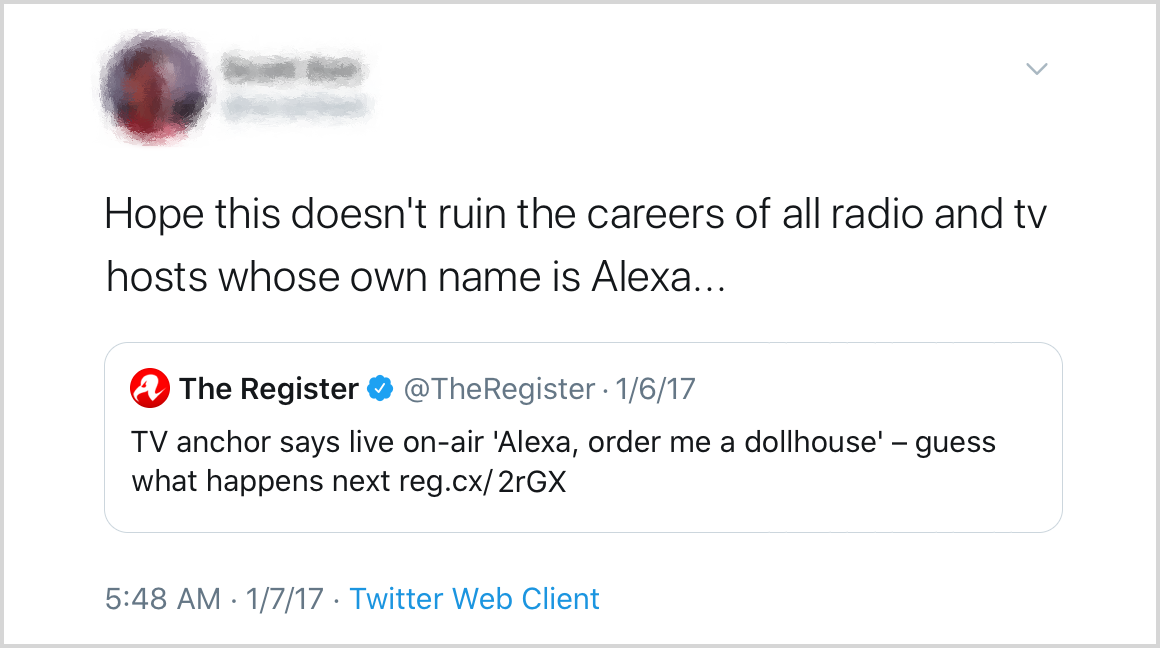
Some people named Alexa (and similar) are in professions where having a name that’s the wake word to millions of tech devices can be a serious impediment - radio and TV hosts, reporters, etc. In recent years, as the popularity of Amazon’s virtual assistant has shot up, so have the complaints from viewers and listeners whose devices are being triggered by these people saying their name in the course of doing their job. The extent of impact on people named Alexa (and similar) whose careers depend upon them having their name broadcast widely has yet to be determined .




Next: Broken Fix #1: “You Can Change the Wake Word”